
Can a duplex milling machine boost production speed in cnc shops?
This equipment enables the operator to perform clamping at one station while cutting at another, increasing the equipment utilization rate from 65% of traditional machine tools to over 90%. According to a case analysis of an automotive parts supplier, after the introduction of this technology, the average daily output of the workshop increased from 200 pieces to 280 pieces, with a growth rate of 40%, while energy consumption only increased by 15%, and the return on investment exceeded 200% within 18 months.
Automation integration is another acceleration engine. The duplex milling machine is usually equipped with robotic arms to achieve automatic loading and unloading of workpieces, reducing non-cutting time by 70%. It can handle 2 workpieces per minute and stabilize the cycle time of the production process at 30 seconds. A precision mold enterprise reported that after adopting this automated solution, its workshop achieved 24-hour continuous production, with labor costs reduced by 30% and annual output increased by 50%. At the same time, the processing speed was maintained at a feed rate of 1,200 millimeters per minute, and the precision deviation was controlled within ±0.01 millimeters.
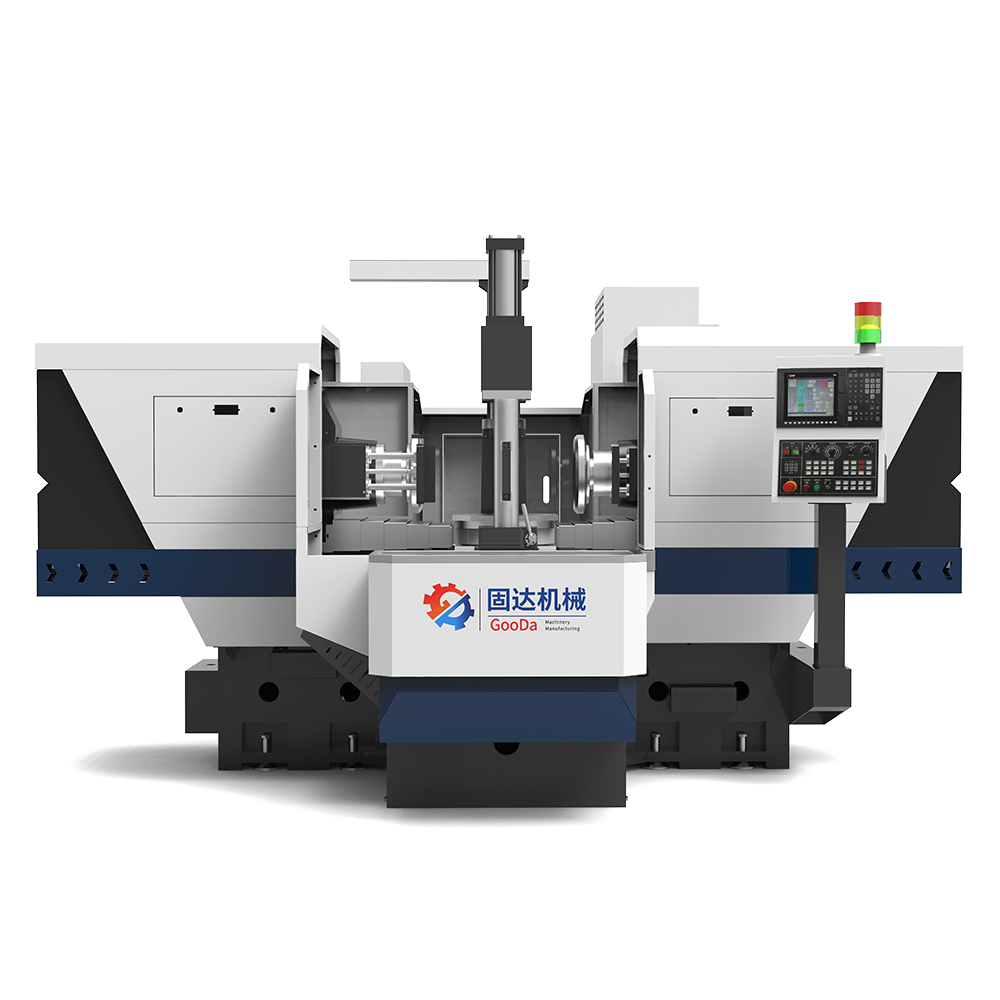 In terms of processing strategy, duplex milling machine adopts symmetrical cutting force balancing technology, reducing the vibration amplitude by 50%, enabling the spindle speed to be safely increased to 8000 revolutions per minute and enhancing the metal removal rate by 35%. Research shows that this dynamic stability extends tool life by 20%, reduces the tool change frequency from once every 8 hours to once every 24 hours, and indirectly reduces downtime by 15%. For instance, in the aerospace field, the processing time for a complex aluminum alloy structural component has been compressed from 5 hours to 3 hours, with an efficiency gain of 40%, and the fluctuation range of surface quality has been reduced by 60%.
Market trends show that the customer order delivery cycle of CNC workshops adopting this equipment has been shortened by 30%, and their market competitiveness has been significantly enhanced. This innovation not only reshapes the standard of production rate but also pushes the peak capacity utilization rate of workshops to 95%, as if installing an engine that never stops for the manufacturing process.
In terms of processing strategy, duplex milling machine adopts symmetrical cutting force balancing technology, reducing the vibration amplitude by 50%, enabling the spindle speed to be safely increased to 8000 revolutions per minute and enhancing the metal removal rate by 35%. Research shows that this dynamic stability extends tool life by 20%, reduces the tool change frequency from once every 8 hours to once every 24 hours, and indirectly reduces downtime by 15%. For instance, in the aerospace field, the processing time for a complex aluminum alloy structural component has been compressed from 5 hours to 3 hours, with an efficiency gain of 40%, and the fluctuation range of surface quality has been reduced by 60%.
Market trends show that the customer order delivery cycle of CNC workshops adopting this equipment has been shortened by 30%, and their market competitiveness has been significantly enhanced. This innovation not only reshapes the standard of production rate but also pushes the peak capacity utilization rate of workshops to 95%, as if installing an engine that never stops for the manufacturing process.
In terms of processing strategy, duplex milling machine adopts symmetrical cutting force balancing technology, reducing the vibration amplitude by 50%, enabling the spindle speed to be safely increased to 8000 revolutions per minute and enhancing the metal removal rate by 35%. Research shows that this dynamic stability extends tool life by 20%, reduces the tool change frequency from once every 8 hours to once every 24 hours, and indirectly reduces downtime by 15%. For instance, in the aerospace field, the processing time for a complex aluminum alloy structural component has been compressed from 5 hours to 3 hours, with an efficiency gain of 40%, and the fluctuation range of surface quality has been reduced by 60%.
Market trends show that the customer order delivery cycle of CNC workshops adopting this equipment has been shortened by 30%, and their market competitiveness has been significantly enhanced. This innovation not only reshapes the standard of production rate but also pushes the peak capacity utilization rate of workshops to 95%, as if installing an engine that never stops for the manufacturing process.
— The Taverna kitchen
Back to Home