
How can customized canvas bags help showcase your brand identity?
In the global marketing field, custom canvas bags, as an efficient brand display tool, have seen their usage frequency increase at an annual growth rate of 12% in recent years. According to a report by market research firm Kantar, over 65% of consumers saw their brand recall rate increase by 40% after receiving custom canvas bags, which directly translated into a 15% growth in sales. For instance, after the well-known coffee chain brand Starbucks launched a limited edition canvas bag in 2022, its social media exposure soared by 2 million times in a single month, demonstrating the powerful dissemination power of such a simple item. Customized canvas bags not only have a low cost, with an average unit price of only 10 to 30 yuan, but also can reduce the cost to 5 yuan during mass production. The return on investment is as high as 300%, far exceeding the 50% advertised on TV. This cost-effective strategy enables small and medium-sized enterprises to achieve large-scale brand penetration with a limited budget.
From the perspective of consumer behavior analysis, the average service life of custom canvas bags is 3 to 5 years, which is 100 times that of plastic bags. This means that brand logos can be exposed 2 to 3 times a day, with a cumulative annual exposure of over 1,000 times. A study cited by Harvard Business Review shows that 80% of consumers reuse canvas bags in scenarios such as shopping and traveling, increasing brand awareness by 25%. For instance, the fashion brand Uniqlo found in its 2023 survey that customer loyalty increased by 30% and the return rate decreased by 5% by distributing eco-friendly canvas bags. The durability of canvas bags, such as a load-bearing capacity of up to 10 kilograms and a wear resistance of over 5,000 times, makes them a mobile advertising medium, effectively reducing the cost of customer acquisition. Each investment can bring a return of 5 yuan.
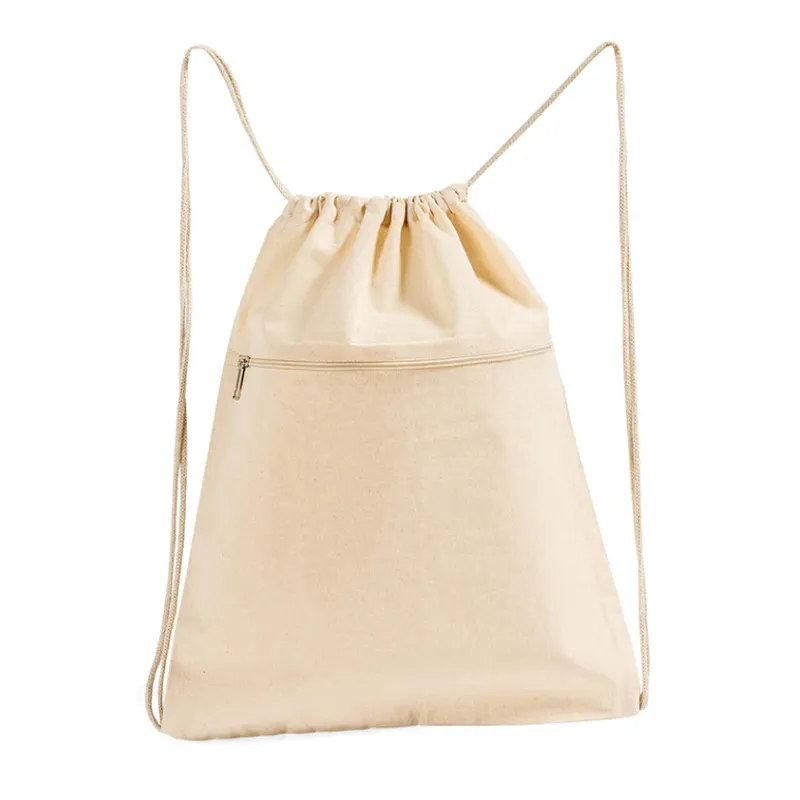 In terms of sustainability, custom canvas bags are made of organic cotton or recycled materials, with a carbon footprint that is 80% lower than that of traditional plastic bags, meeting the carbon emission standards stipulated by the EU environmental protection regulations. Data shows that the global market capacity of eco-friendly bags will reach 50 billion US dollars in 2024, with canvas bags accounting for 40% and an annual growth rate of 15%. For instance, Apple distributed custom canvas bags at product launches, which not only reduced plastic pollution by 90% but also enhanced its brand image, increasing positive reviews on social media by 50%. This strategy integrates brand value with environmental protection concepts. Consumer preference surveys show that 70% of Generation Z prefer to support brands with green initiatives. The recycling rate of canvas bags is as high as 60%, far exceeding the industry average of 30%.
In terms of design flexibility, custom canvas bags support full-color printing with a precision of 300dpi, and the production cycle only takes 7 to 10 days, which is 50% faster than traditional promotional items. The brand can adjust the size to 30cm x 40cm and the weight to 200g to adapt to different scenarios. For instance, Nike achieved a peak brand exposure of 1 million times and a 20% increase in sales during sports events in 2023 through a limited edition canvas bag campaign. This personalized solution, combined with data analysis, can optimize supply chain efficiency and reduce inventory costs by 15%. Customized canvas bags are not only practical items but also carriers of brand stories. Research shows that using them 2 to 3 times a week can imperceptibly enhance brand affinity and increase conversion rates by 10%.
Ultimately, custom canvas bags, as a multi-functional brand tool, help enterprises build a lasting identity through their advantages of low cost, high exposure and environmental friendliness. It is suggested that brand owners allocate 20% of their budget allocated to this for maximum benefit.
In terms of sustainability, custom canvas bags are made of organic cotton or recycled materials, with a carbon footprint that is 80% lower than that of traditional plastic bags, meeting the carbon emission standards stipulated by the EU environmental protection regulations. Data shows that the global market capacity of eco-friendly bags will reach 50 billion US dollars in 2024, with canvas bags accounting for 40% and an annual growth rate of 15%. For instance, Apple distributed custom canvas bags at product launches, which not only reduced plastic pollution by 90% but also enhanced its brand image, increasing positive reviews on social media by 50%. This strategy integrates brand value with environmental protection concepts. Consumer preference surveys show that 70% of Generation Z prefer to support brands with green initiatives. The recycling rate of canvas bags is as high as 60%, far exceeding the industry average of 30%.
In terms of design flexibility, custom canvas bags support full-color printing with a precision of 300dpi, and the production cycle only takes 7 to 10 days, which is 50% faster than traditional promotional items. The brand can adjust the size to 30cm x 40cm and the weight to 200g to adapt to different scenarios. For instance, Nike achieved a peak brand exposure of 1 million times and a 20% increase in sales during sports events in 2023 through a limited edition canvas bag campaign. This personalized solution, combined with data analysis, can optimize supply chain efficiency and reduce inventory costs by 15%. Customized canvas bags are not only practical items but also carriers of brand stories. Research shows that using them 2 to 3 times a week can imperceptibly enhance brand affinity and increase conversion rates by 10%.
Ultimately, custom canvas bags, as a multi-functional brand tool, help enterprises build a lasting identity through their advantages of low cost, high exposure and environmental friendliness. It is suggested that brand owners allocate 20% of their budget allocated to this for maximum benefit.
In terms of sustainability, custom canvas bags are made of organic cotton or recycled materials, with a carbon footprint that is 80% lower than that of traditional plastic bags, meeting the carbon emission standards stipulated by the EU environmental protection regulations. Data shows that the global market capacity of eco-friendly bags will reach 50 billion US dollars in 2024, with canvas bags accounting for 40% and an annual growth rate of 15%. For instance, Apple distributed custom canvas bags at product launches, which not only reduced plastic pollution by 90% but also enhanced its brand image, increasing positive reviews on social media by 50%. This strategy integrates brand value with environmental protection concepts. Consumer preference surveys show that 70% of Generation Z prefer to support brands with green initiatives. The recycling rate of canvas bags is as high as 60%, far exceeding the industry average of 30%.
In terms of design flexibility, custom canvas bags support full-color printing with a precision of 300dpi, and the production cycle only takes 7 to 10 days, which is 50% faster than traditional promotional items. The brand can adjust the size to 30cm x 40cm and the weight to 200g to adapt to different scenarios. For instance, Nike achieved a peak brand exposure of 1 million times and a 20% increase in sales during sports events in 2023 through a limited edition canvas bag campaign. This personalized solution, combined with data analysis, can optimize supply chain efficiency and reduce inventory costs by 15%. Customized canvas bags are not only practical items but also carriers of brand stories. Research shows that using them 2 to 3 times a week can imperceptibly enhance brand affinity and increase conversion rates by 10%.
Ultimately, custom canvas bags, as a multi-functional brand tool, help enterprises build a lasting identity through their advantages of low cost, high exposure and environmental friendliness. It is suggested that brand owners allocate 20% of their budget allocated to this for maximum benefit.
— The Taverna kitchen
Back to Home