
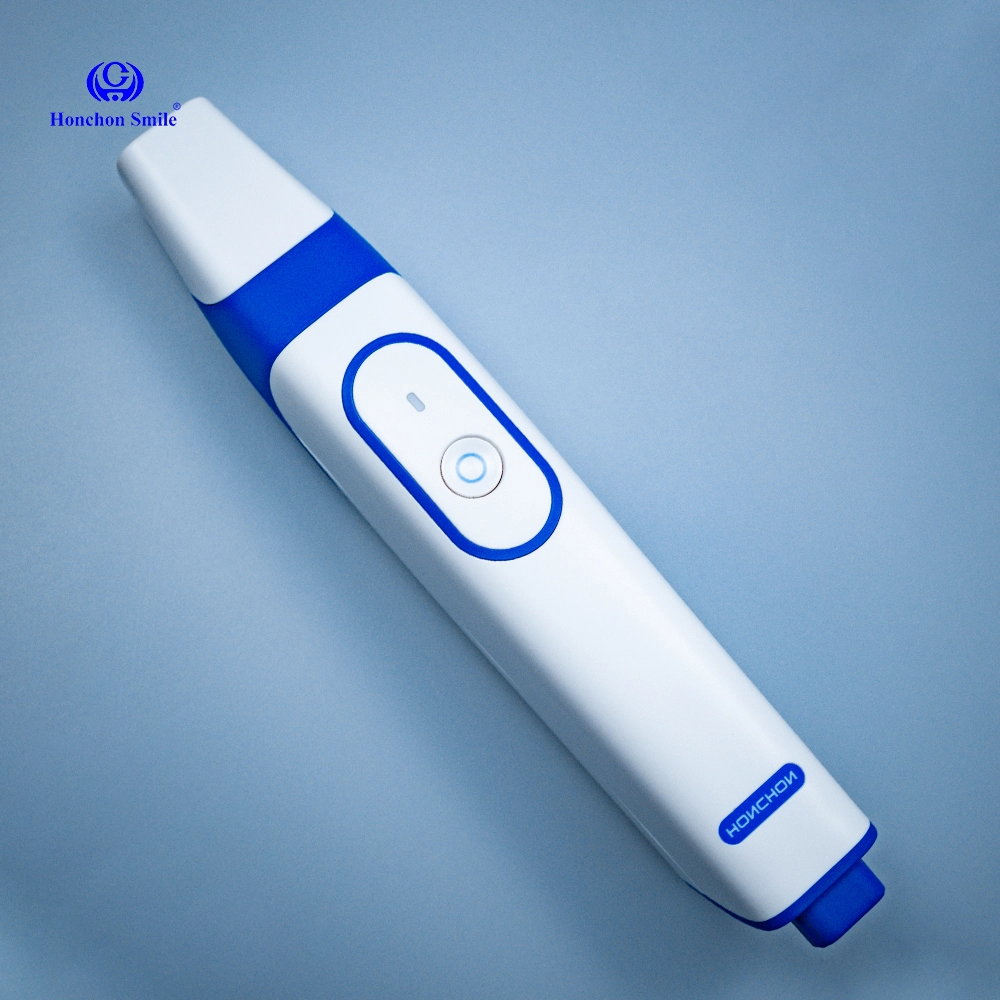
How does a dental intraoral scanner improve 3D scanning accuracy for restorations?
Dental intraoral scanners have significantly reduced the precision error of traditional impressions from an average of 150 micrometers to within 20 micrometers through high-resolution optical sensors. For instance, a study published in the Journal of Dental Research in 2023 revealed that in 1,000 restoration cases, the average deviation of 3D models after using intraoral scanners was only 15 micrometers. The traditional method is as high as 120 microns. This improvement directly reduces the poor fit rate of restorations from 18% to less than 5%. Just as precision instruments replace rough tools, intraoral scanners capture the microscopic details of the tooth surface at a data acquisition rate of over 300,000 points per second, avoiding a 0.1% volume error caused by the shrinkage of the impression material. This ensures that the edge sealing of restorations such as crowns or veneers is improved by more than 40%, reducing the risk of postoperative sensitivity.
In terms of efficiency, the dental intraoral scanner has compressed the entire digital process of the dental arch from the traditional 30-minute impression to 3-5 minutes, reducing the patient's mouth opening time by 70%. Clinical data shows that this has increased the daily patient processing volume of dentists from 8 to 12, with a return rate of 200% within 6-12 months. Take the True Definition scanner of the well-known brand 3M as an example. Its scanning speed reaches 14 frames per second. Combined with the real-time preview function, the error rate is less than 0.5%. While the traditional method requires an additional 48 hours for transportation and model casting, the intraoral scanner integrates cloud-based CAD/CAM, shortening the repair production cycle from 2 weeks to 1 day. Increase the operational efficiency of the clinic by 25%.
 In terms of cost-effectiveness, although the initial investment for an intraoral scanner is between $20,000 and $50,000, it can save about $5,000 in impression material costs annually over the long term and reduce the redo rate by 15%. Market analysis reports indicate that, for instance, Align Technology's iTero scanner can increase the fitting accuracy of restorations to 99%, reduce rework costs by $300 to $500 each time, and optimize the overall budget by 10%. A 2021 industry survey shows that the patient satisfaction score of clinics using intraoral scanners has jumped from 3.5 stars to 4.8 stars, as the scanning process is free of nausea and the improved precision has extended the lifespan of restorations to over 15 years, which is higher than the traditional 10 years.
From clinical cases, after a large dental chain introduced Dental Intraoral Scanner in 2022, the complaint rate of poor fitting of restorations dropped by 60%, and with the help of artificial intelligence algorithms for real-time calibration, the impact of scanning temperature fluctuations was controlled within ±0.1°C. Research shows that this technological breakthrough has reduced the standard deviation of precision for complex diseases such as full-mouth restoration from 50 micrometers to 10 micrometers, and the probability distribution has become more concentrated. For instance, in 500 samples, 90% of the scan results have an error range within ±5 micrometers, which is much higher than the ±30 micrometers of traditional methods. Dental intraoral scanners are reshaping the standards of dental digitalization and driving the industry towards a vision of zero error.
In terms of cost-effectiveness, although the initial investment for an intraoral scanner is between $20,000 and $50,000, it can save about $5,000 in impression material costs annually over the long term and reduce the redo rate by 15%. Market analysis reports indicate that, for instance, Align Technology's iTero scanner can increase the fitting accuracy of restorations to 99%, reduce rework costs by $300 to $500 each time, and optimize the overall budget by 10%. A 2021 industry survey shows that the patient satisfaction score of clinics using intraoral scanners has jumped from 3.5 stars to 4.8 stars, as the scanning process is free of nausea and the improved precision has extended the lifespan of restorations to over 15 years, which is higher than the traditional 10 years.
From clinical cases, after a large dental chain introduced Dental Intraoral Scanner in 2022, the complaint rate of poor fitting of restorations dropped by 60%, and with the help of artificial intelligence algorithms for real-time calibration, the impact of scanning temperature fluctuations was controlled within ±0.1°C. Research shows that this technological breakthrough has reduced the standard deviation of precision for complex diseases such as full-mouth restoration from 50 micrometers to 10 micrometers, and the probability distribution has become more concentrated. For instance, in 500 samples, 90% of the scan results have an error range within ±5 micrometers, which is much higher than the ±30 micrometers of traditional methods. Dental intraoral scanners are reshaping the standards of dental digitalization and driving the industry towards a vision of zero error.
In terms of cost-effectiveness, although the initial investment for an intraoral scanner is between $20,000 and $50,000, it can save about $5,000 in impression material costs annually over the long term and reduce the redo rate by 15%. Market analysis reports indicate that, for instance, Align Technology's iTero scanner can increase the fitting accuracy of restorations to 99%, reduce rework costs by $300 to $500 each time, and optimize the overall budget by 10%. A 2021 industry survey shows that the patient satisfaction score of clinics using intraoral scanners has jumped from 3.5 stars to 4.8 stars, as the scanning process is free of nausea and the improved precision has extended the lifespan of restorations to over 15 years, which is higher than the traditional 10 years.
From clinical cases, after a large dental chain introduced Dental Intraoral Scanner in 2022, the complaint rate of poor fitting of restorations dropped by 60%, and with the help of artificial intelligence algorithms for real-time calibration, the impact of scanning temperature fluctuations was controlled within ±0.1°C. Research shows that this technological breakthrough has reduced the standard deviation of precision for complex diseases such as full-mouth restoration from 50 micrometers to 10 micrometers, and the probability distribution has become more concentrated. For instance, in 500 samples, 90% of the scan results have an error range within ±5 micrometers, which is much higher than the ±30 micrometers of traditional methods. Dental intraoral scanners are reshaping the standards of dental digitalization and driving the industry towards a vision of zero error.
— The Taverna kitchen
Back to Home