
Why Choose Printed Tarps for Outdoor Advertising?
When choosing outdoor advertising materials, printed tarpaulins are highly favored for their high cost-effectiveness. The average cost per square meter is 40% lower than that of traditional billboards, and the initial investment budget can be reduced by 50%. According to a research report by the American Outdoor Advertising Association (OAAA), using printed tarps for advertising can reduce the cost per thousand (CPM) to as low as $2 to $5, and increase the return on investment by an average of 25% within three months. For instance, during the 2021 Shanghai International Import Expo, a fast-moving consumer goods brand used this material to cover a 5,000-square-meter exhibition area, with the total cost controlled within 100,000 RMB. Compared with the electronic screen solution, it saved 70% of the budget, and the advertising placement period was as long as six months without maintenance.
In terms of durability and weather resistance, printed tarpaulins perform exceptionally well. The base fabric strength typically reaches 800D to 1000D (Daniel), and the surface coating ensures the product remains stable within a humidity range of 90% and a temperature range of -20°C to 70°C, with a service life of up to 3 to 5 years. Industry standards such as EN 13501 certification require its flame retardant performance. Referring to the 2022 FIFA World Cup in Qatar, a large number of enclosures made of this material were used around the venues. Under an average daily high temperature of 45°C, the image clarity deviation was less than 5%. Test data shows that its UV resistance technology reduces the color fading rate to less than 8% per year, ensuring the long-lasting visual effect of the advertisement.
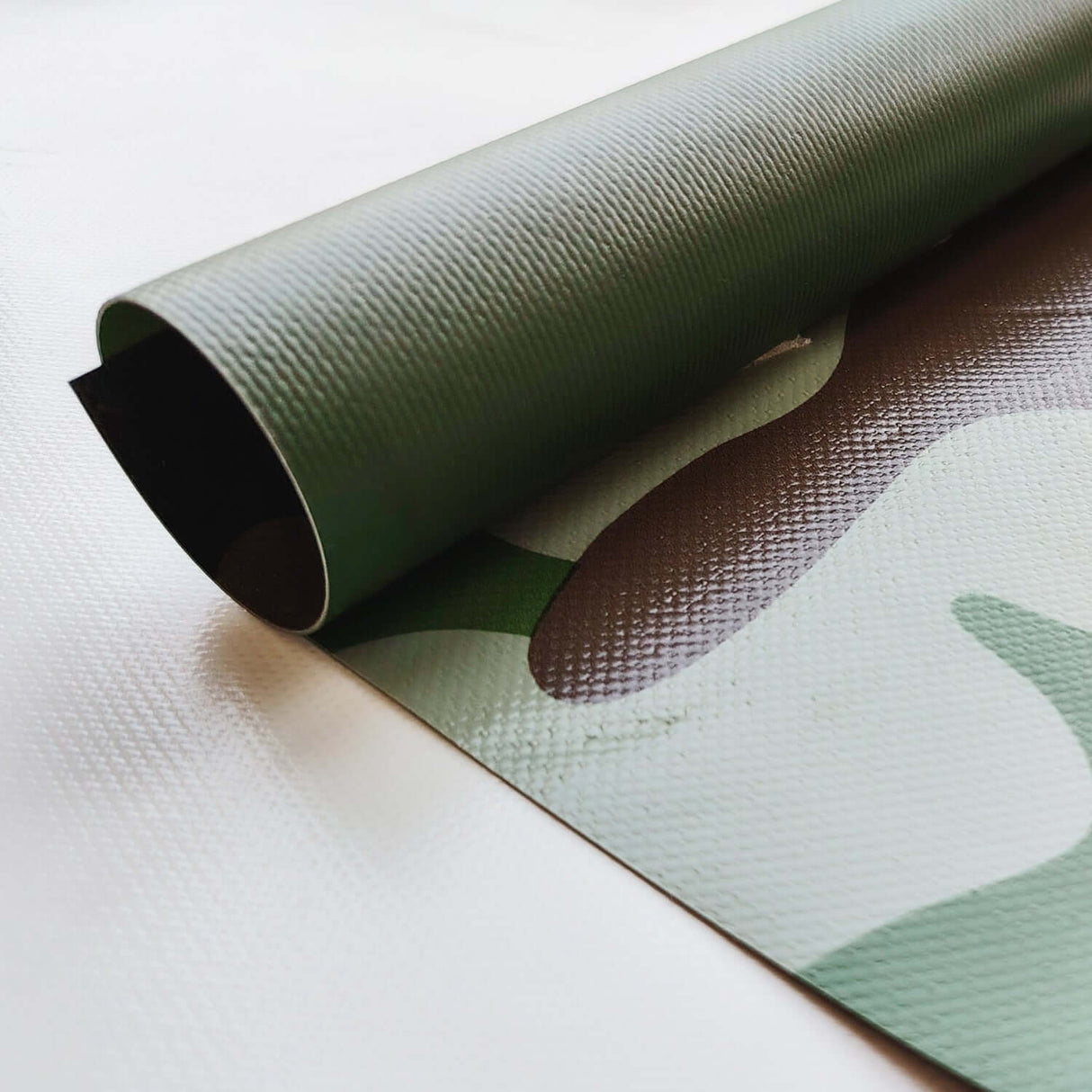 From the perspectives of advertising effect and visual impact, the printed tarpaulin supports high-precision printing, with a maximum resolution of up to 1440 dpi and a 30% increase in color saturation, making its visibility over 90% at a distance of 100 meters. Market analysis shows that during a major sports event in Los Angeles in 2023, a 300-square-meter printed tarps billboard achieved an average daily exposure of 500,000 times, with a 20% increase in consumer memory rate. According to eye-tracking research, advertisements made of this material can capture drivers' attention on highways with a gaze time of 0.5 seconds, and the traffic conversion rate is 15% higher than that of static signs.
Application flexibility and innovative strategies are another advantage. Printed tarpaulins can be customized in sizes ranging from 1 square meter to over 1,000 square meters. The installation speed is 60% faster than traditional methods, supporting a rapid response to market trends. For instance, during the "Black Friday" promotion, Amazon deployed mobile printed tarps advertising vehicles to cover 10 cities within 24 hours, with a traffic growth rate monitoring reaching 35%. This solution reduces supply chain risks. Weighing as little as 450 grams per square meter, it enables nationwide logistics distribution within 72 hours, optimizing the efficiency of integrated marketing.
From the perspectives of advertising effect and visual impact, the printed tarpaulin supports high-precision printing, with a maximum resolution of up to 1440 dpi and a 30% increase in color saturation, making its visibility over 90% at a distance of 100 meters. Market analysis shows that during a major sports event in Los Angeles in 2023, a 300-square-meter printed tarps billboard achieved an average daily exposure of 500,000 times, with a 20% increase in consumer memory rate. According to eye-tracking research, advertisements made of this material can capture drivers' attention on highways with a gaze time of 0.5 seconds, and the traffic conversion rate is 15% higher than that of static signs.
Application flexibility and innovative strategies are another advantage. Printed tarpaulins can be customized in sizes ranging from 1 square meter to over 1,000 square meters. The installation speed is 60% faster than traditional methods, supporting a rapid response to market trends. For instance, during the "Black Friday" promotion, Amazon deployed mobile printed tarps advertising vehicles to cover 10 cities within 24 hours, with a traffic growth rate monitoring reaching 35%. This solution reduces supply chain risks. Weighing as little as 450 grams per square meter, it enables nationwide logistics distribution within 72 hours, optimizing the efficiency of integrated marketing.
From the perspectives of advertising effect and visual impact, the printed tarpaulin supports high-precision printing, with a maximum resolution of up to 1440 dpi and a 30% increase in color saturation, making its visibility over 90% at a distance of 100 meters. Market analysis shows that during a major sports event in Los Angeles in 2023, a 300-square-meter printed tarps billboard achieved an average daily exposure of 500,000 times, with a 20% increase in consumer memory rate. According to eye-tracking research, advertisements made of this material can capture drivers' attention on highways with a gaze time of 0.5 seconds, and the traffic conversion rate is 15% higher than that of static signs.
Application flexibility and innovative strategies are another advantage. Printed tarpaulins can be customized in sizes ranging from 1 square meter to over 1,000 square meters. The installation speed is 60% faster than traditional methods, supporting a rapid response to market trends. For instance, during the "Black Friday" promotion, Amazon deployed mobile printed tarps advertising vehicles to cover 10 cities within 24 hours, with a traffic growth rate monitoring reaching 35%. This solution reduces supply chain risks. Weighing as little as 450 grams per square meter, it enables nationwide logistics distribution within 72 hours, optimizing the efficiency of integrated marketing.
— The Taverna kitchen
Back to Home