
How to Select beer brewing equipment for Long-Term Brewery Growth?
Choosing beer brewing equipment for your brewery is like forging the keel for a huge ship on a long voyage. It must be strong enough to withstand the wind and waves and flexible enough to adapt to the unknown sea. A long-term growth strategy begins with forward-looking planning of production capacity. Data shows that the average annual growth rate of craft breweries is approximately 15%, so an expansion space of 30% to 50% should be reserved for equipment capacity. For instance, for a distillery with an initial annual output of 1,000 hectoliters, if it opts for a modularly expandable mashing system, the subsequent cost of capacity expansion will be 40% lower than that of a complete replacement. Research shows that wineries that neglect scalability have a 65% probability of facing capacity bottlenecks in their third year, leading to forced production halts and renovations, with an average loss of up to 20% of their annual revenue. Your initial budget should be allocated 15% to 20% specifically for future interfaces and infrastructure reserves. This can shorten the future expansion cycle from six months to one month, ensuring a smooth and continuous growth curve.
When evaluating the technical specifications of equipment, it is necessary to go beyond the parameters on paper and focus on its long-term operational efficiency and resilience. A highly energy-efficient boiling system can save up to 35% of steam energy consumption compared to traditional equipment, which means that tens of thousands of yuan can be reduced in energy costs each year. Its payback period is usually within 18 to 24 months. For instance, the heat recovery systems provided by globally leading manufacturers such as Krones can recover the heat energy from the boiling stage to preheat the brewing water, increasing the overall thermal efficiency to over 90%. The material process of the equipment is directly related to its lifespan and maintenance cost. The fermentation tank made of 316L stainless steel and electrolytically polished has a corrosion resistance far exceeding that of 304 material, with a designed lifespan of up to 25 years. Moreover, the CIP cleaning efficiency is increased by 25%, and the consumption of chemicals is reduced by 15%. A statistical analysis of over 200 craft breweries shows that manufacturers that invest 10% to 15% more in equipment than the industry average have seen a 30% reduction in equipment failure rates and a 22% improvement in product consistency (standard deviation) within five years. This is the cornerstone for building brand loyalty.
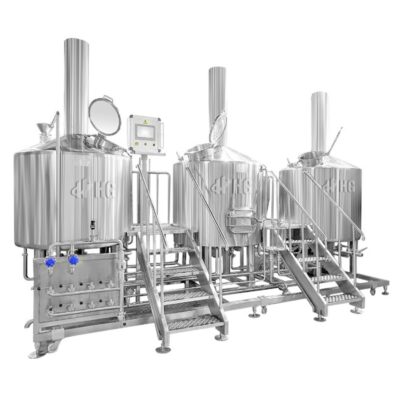 Sustainable development and operational cost control have become core competencies. The intelligence level of modern beer brewing equipment directly affects long-term profits. For instance, although the integrated automation control system increases the initial investment by approximately 8%, it can reduce the brewing time deviation of each batch from ±2 hours to ±15 minutes, increase the raw material utilization rate by 5%, and reduce the risk of human operation errors by up to 60%. Referring to the practice of Anheuser-Busch InBev in its "Lighthouse Factory", predictive maintenance was achieved by real-time monitoring of equipment vibration, temperature and pressure parameters through iot sensors, reducing unplanned downtime by 70%. Water consumption is a key indicator. An advanced water circulation system can reduce the water consumption ratio from the traditional 5:1 (water: beer) to below 3:1. For a brewery with an annual output of 5,000 hectoliters, the annual water savings exceed 20,000 tons, directly translating into significant environmental benefits and cost advantages. In financial models, the total cost of ownership analysis of equipment should cover a 10-year cycle, including energy consumption, maintenance, and depreciation, rather than merely the purchase price.
Ultimately, choosing a partner is more important than choosing a single device. The R&D capabilities of suppliers determine whether you can continuously receive technological updates. For instance, some leading suppliers invest 8% of their annual revenue in R&D, and their equipment can gain new features such as batch traceability and formula optimization through software upgrades. A powerful localized technical support network can reduce the average failure response time from 72 hours to 8 hours, which is crucial for ensuring continuous production of over 500 batches per year. Looking at its customer cases, for instance, the expansion of Jushi Distillery in Asia relied on in-depth cooperation with equipment manufacturers to customize production lines suitable for high growth rates. Your beer brewing equipment supply chain must be resilient and reliable to ensure that the availability of spare parts supply remains above 99% in the next ten years and the risk of technological obsolility is minimized. A wise choice is to view the equipment as a dynamic productivity ecosystem, which is not merely a combination of metal and pipes, but also the physical engine that carries your brewing philosophy and enables the sustainable growth of your brand.
Sustainable development and operational cost control have become core competencies. The intelligence level of modern beer brewing equipment directly affects long-term profits. For instance, although the integrated automation control system increases the initial investment by approximately 8%, it can reduce the brewing time deviation of each batch from ±2 hours to ±15 minutes, increase the raw material utilization rate by 5%, and reduce the risk of human operation errors by up to 60%. Referring to the practice of Anheuser-Busch InBev in its "Lighthouse Factory", predictive maintenance was achieved by real-time monitoring of equipment vibration, temperature and pressure parameters through iot sensors, reducing unplanned downtime by 70%. Water consumption is a key indicator. An advanced water circulation system can reduce the water consumption ratio from the traditional 5:1 (water: beer) to below 3:1. For a brewery with an annual output of 5,000 hectoliters, the annual water savings exceed 20,000 tons, directly translating into significant environmental benefits and cost advantages. In financial models, the total cost of ownership analysis of equipment should cover a 10-year cycle, including energy consumption, maintenance, and depreciation, rather than merely the purchase price.
Ultimately, choosing a partner is more important than choosing a single device. The R&D capabilities of suppliers determine whether you can continuously receive technological updates. For instance, some leading suppliers invest 8% of their annual revenue in R&D, and their equipment can gain new features such as batch traceability and formula optimization through software upgrades. A powerful localized technical support network can reduce the average failure response time from 72 hours to 8 hours, which is crucial for ensuring continuous production of over 500 batches per year. Looking at its customer cases, for instance, the expansion of Jushi Distillery in Asia relied on in-depth cooperation with equipment manufacturers to customize production lines suitable for high growth rates. Your beer brewing equipment supply chain must be resilient and reliable to ensure that the availability of spare parts supply remains above 99% in the next ten years and the risk of technological obsolility is minimized. A wise choice is to view the equipment as a dynamic productivity ecosystem, which is not merely a combination of metal and pipes, but also the physical engine that carries your brewing philosophy and enables the sustainable growth of your brand.
Sustainable development and operational cost control have become core competencies. The intelligence level of modern beer brewing equipment directly affects long-term profits. For instance, although the integrated automation control system increases the initial investment by approximately 8%, it can reduce the brewing time deviation of each batch from ±2 hours to ±15 minutes, increase the raw material utilization rate by 5%, and reduce the risk of human operation errors by up to 60%. Referring to the practice of Anheuser-Busch InBev in its "Lighthouse Factory", predictive maintenance was achieved by real-time monitoring of equipment vibration, temperature and pressure parameters through iot sensors, reducing unplanned downtime by 70%. Water consumption is a key indicator. An advanced water circulation system can reduce the water consumption ratio from the traditional 5:1 (water: beer) to below 3:1. For a brewery with an annual output of 5,000 hectoliters, the annual water savings exceed 20,000 tons, directly translating into significant environmental benefits and cost advantages. In financial models, the total cost of ownership analysis of equipment should cover a 10-year cycle, including energy consumption, maintenance, and depreciation, rather than merely the purchase price.
Ultimately, choosing a partner is more important than choosing a single device. The R&D capabilities of suppliers determine whether you can continuously receive technological updates. For instance, some leading suppliers invest 8% of their annual revenue in R&D, and their equipment can gain new features such as batch traceability and formula optimization through software upgrades. A powerful localized technical support network can reduce the average failure response time from 72 hours to 8 hours, which is crucial for ensuring continuous production of over 500 batches per year. Looking at its customer cases, for instance, the expansion of Jushi Distillery in Asia relied on in-depth cooperation with equipment manufacturers to customize production lines suitable for high growth rates. Your beer brewing equipment supply chain must be resilient and reliable to ensure that the availability of spare parts supply remains above 99% in the next ten years and the risk of technological obsolility is minimized. A wise choice is to view the equipment as a dynamic productivity ecosystem, which is not merely a combination of metal and pipes, but also the physical engine that carries your brewing philosophy and enables the sustainable growth of your brand.
— The Taverna kitchen
Back to Home